
Duraludon’s Launch Dominance: A 2026 Pokemon Unite Retrospective
In 2026, Pokémon Unite is a far more crowded arena than it was during Duraludon’s debut, yet the old complaints still echo: matchmaking can feel like a shuffled deck, and Holowear prices remain a luxury tax on fashion. Against that backdrop, Duraludon’s launch remains a favorite case study. When the physical Attacker first arrived, it was not merely strong; it was a temporary license to erase health bars. Reports from that launch window described 100k damage without even trying, and the comparison to Sylveon’s overtuned debut was immediate. The most important lesson for 2026 is not that Duraludon is still broken, but that launch windows can bend Pokemon Unite’s meta like a cheap spoon.
A New Attacker With a Rocket Launcher’s Resume
Duraludon occupied the ADC niche: a physical Attacker that relied on range and AOE abilities rather than mobility. It drew comparisons to Decidueye, but its kit was far more powerful than Decidueye’s had ever been. At launch, Duraludon did not reward careful dueling so much as punish anyone standing in the same zip code. The engine behind that pressure was Dragon Pulse, a charged ability that dealt damage in a large area which grew in size and damage the longer it was charged. Basic attacks and Duraludon’s other moves marked Pokémon, and Dragon Pulse dealt bonus damage based on how many times a target had been marked. If Dragon Pulse knocked out a Pokémon, its cooldown was reduced by half and Duraludon gained three boosted basic attacks; the upgraded version also restored HP on a KO.
The damage potential against marked enemies was absurd. Imagine Dragonite’s Hyper Beam, but instead of targeting a single enemy it hit everyone in the same zip code. It lacked the same instant burst because its damage arrived over time, but extreme range and AOE more than compensated. Dragon Pulse was like a lighthouse beam that had learned to bill entire neighborhoods for standing in its light.
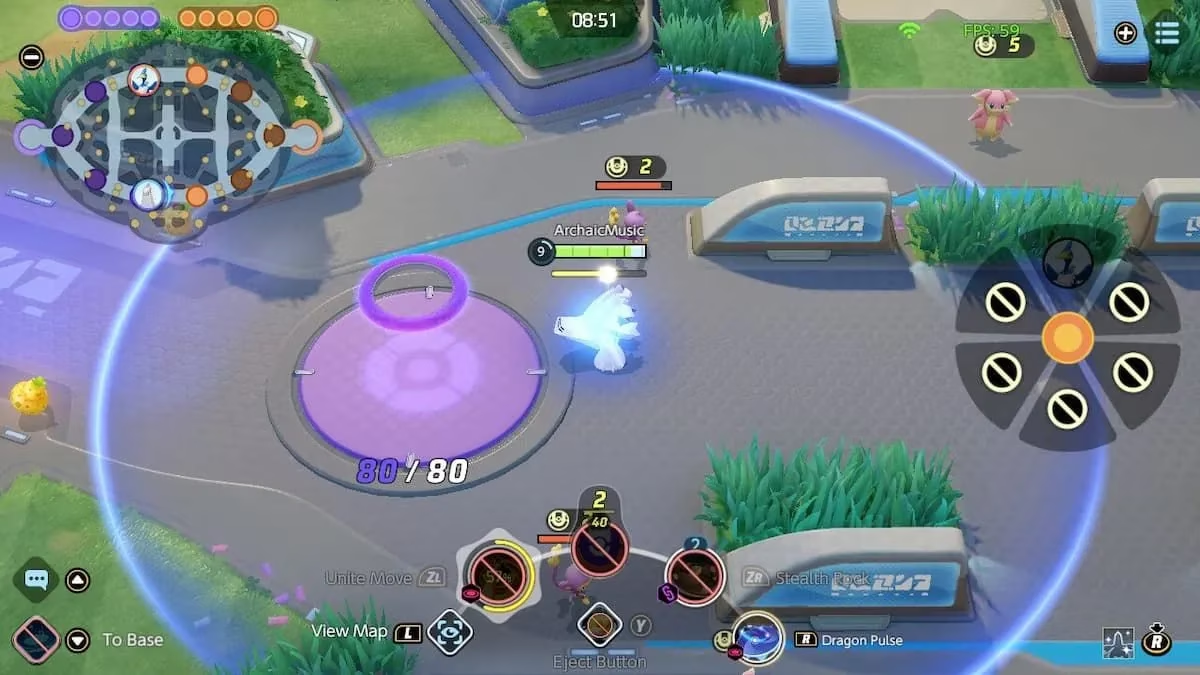
Marks, Stealth Rock, and a Very Angry Circle
The mark system functioned like a parking ticket that compounded interest until the city towed the whole team. Duraludon could turn a team fight in less than a second and execute multiple opponents without needing precise aim or putting itself in danger. Stealth Rock added utility by zoning out bushes and stacking marks for a future Dragon Pulse, while the Unite Move created yet another massive AOE pain circle. Duraludon was not as self-sufficient as Lucario or Greedent, but even a small amount of support from a Defender or Supporter made it capable of steamrolling teams.
| Tool | Launch-era effect | 2026 takeaway |
|---|---|---|
| Dragon Pulse | Charged AOE with mark scaling and KO refund | Layered scaling can overwhelm counterplay |
| Stealth Rock | Bush zoning and mark stacking | Zone control remains premium |
| Unite Move | Huge AOE damage circle | Team-fight swings define launch hype |
The Nerf Hammer Always Swings
When Sylveon released, Hyper Voice was strong enough that TiMi nerfed it within days. Duraludon seemed destined for the same treatment, and that expectation framed the launch experience. By 2026, Duraludon has long since been absorbed into a much larger roster and a faster patch cadence, so the version that terrorized launch lobbies is a historical artifact rather than a current terror. Still, that brief dominance remains a benchmark for overtuned releases. Players who remember cleaning up with Tsareena and Dragonite when they were overpowered understand the appeal of temporary fun. Duraludon’s launch was a bull in a china shop, except the bull had a spreadsheet and a leaf blower.
The advice from that era still lands in 2026: play the overtuned Pokémon while it is large and in charge, because the nerf hammer is not a rumor; it is a scheduled appointment. Matchmaking may still be a disaster and Holowear may still be expensive, but Duraludon’s launch window proved that a single new Attacker can make Pokemon Unite feel wildly different, at least until the next balance patch arrives.