
Espeon's Arrival in Pokemon Unite: A Look Back at the Game-Changing Attacker
I still remember the electric thrill that coursed through the Pokemon Unite community back in mid-May of 2022. Word had spread like wildfire that a new Psychic-type was about to grace the stadiums, and the speculation felt like a swarm of Combee buzzing around a hidden Vespiquen. When Espeon finally leaped into the fray on May 16, 2022, at 12:00 AM PDT, it wasn't just another roster addition—it was a seismic event that recalibrated the entire meta, much like a sudden comet carving a new path across a familiar night sky.
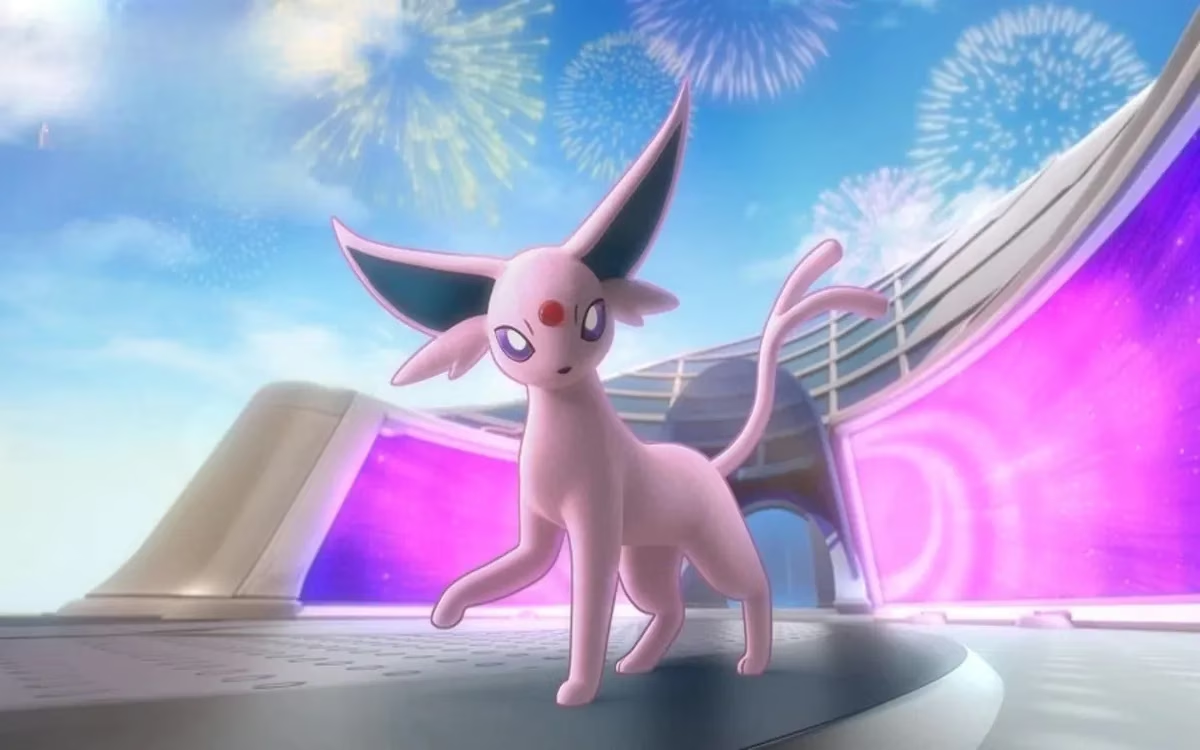
Now, in 2026, looking back through the lens of thousands of matches, Espeon’s debut stands as a monument to how a single Attacker can reshape strategies. But at that moment, the primary question wasn't about its long-term legacy—it was simpler: when exactly would it drop, and what would it bring to the table? The answer came fast and clear. Espeon rolled out globally at 7:00 AM UTC on May 16, and it didn't arrive empty-handed. True to the fashion of previous releases, it came draped in a stunning Pokébuki Holowear, a cosmetic style that veterans instantly recognized from Blastoise's own elegant attire. I recall equipping that holowear for the first time and feeling as though my Espeon had stepped out of an ancient festival painting, its jewel gleaming with the promise of untold power.
The Role That Defined a Generation
From day one, Espeon was classified as an Attacker, and rightfully so. In Pokemon Unite, Attackers are the scalpel of any composition—they slice through opponents with concentrated, overwhelming damage, but they demand precise positioning to avoid shattering under pressure. Having an Attacker like Espeon in the top lane was akin to wielding a perfectly tempered blade: when swung correctly, it could cleave through defenses and turn team fights into routs. When mishandled, the blade would recoil, leaving our team exposed. My own early games were a trial by fire. I quickly learned that while Espeon’s burst potential was absurdly high, its fragility meant every skirmish required the care of a watchmaker fixing a delicate spring. One wrong step and you’d be sent back to base, your damage window slammed shut.
What elevated Espeon above many of its peers was the versatility hidden within its psychic arsenal. Moves like Psyshock and Stored Power didn't just deal damage; they allowed for adaptive playstyles that could punish divers or poke from a safe distance. In those first few weeks, the meta underwent a quiet revolution. Teams that had relied on bulky all-rounders to soak up pressure suddenly found themselves shredded by a well-played Espeon from beyond their reach. I saw defensive staples like Snorlax and Slowbro rethink their engagement approaches, because a stray Psyshock could evaporate half a health bar before they could blink. The cat-and-mouse dynamic felt like a high-stakes game of chess, with Espeon as the queen—devastatingly powerful, yet constantly hunted.
Cosmetic Flair and Community Fever
The simultaneous release of the Pokébuki Holowear added a cultural flourish that deepened the excitement. It wasn't merely a skin; it was a wearable emblem of dedication, echoing the traditional patterns that Blastoise had showcased. I remember battles where both Espeons wore that holowear, turning top-lane duels into mirror matches of artistic expression. That visual flair helped cement Espeon not just as a meta pick, but as an icon of the game's evolving identity. Players who had collected the Blastoise version now felt a sense of continuity, like adding another beautifully illustrated chapter to a living storybook.
Leaks, Speculation, and the Road Ahead
Even as Espeon settled into its role, the rumor mill never slowed down. Leaked information hinted at a pipeline of new Pokemon still in development, each one promising to disrupt the established order in its own way. Back then, my circle of fellow trainers spent countless nights debating which mon would emerge next and whether it could dethrone Espeon from its newly claimed throne. Some speculated about the arrival of Umbreon as a Defender counterpart, others dreamed of legends like Deoxys. That constant sense of anticipation is what makes Pokemon Unite feel alive—every new release is a fresh puzzle piece that can transform the entire picture. When I look at the roster now in 2026, enriched by years of additions, I see Espeon's shadow stretching across many design choices. Its emphasis on high-risk, high-reward ranged damage set a template that numerous later Attackers would follow.
A Lasting Impact
Reflecting on that May morning some four years ago, it's remarkable how a single Pokemon can encapsulate both a moment and a movement. Espeon wasn’t just another attacker; it was a statement that Pokemon Unite would never be static. The precision it demanded taught me, and many others, the true art of positioning—the understanding that a battle is often won not by brute force but by the delicate dance of footwork and timing. Today, when I pick Espeon for a ranked match, it still carries that original thrill, a blend of nostalgia and competitive edge. The jewel on its forehead glows as brightly as it did on day one, a reminder that in the ever-shifting tide of the meta, certain stars leave a permanent glow.