
Fortifying the Backline: A Support's Guide to Held Items in Pokemon Unite 2026
In the ever-shifting currents of Aeos Island in 2026, the role of a Support Pokemon is no longer just about healing—it’s about becoming the invisible scaffolding that holds a crumbling team together. Like a deep-sea anchor in a tempest, a well-built Supporter can absorb chaos and redirect it into victory. Kai, a veteran trainer who had climbed to Master rank three seasons in a row, understood this better than anyone. He recalled his early days when he foolishly equipped his Blissey with raw attack items, only to be shredded in seconds. Now, his held-item strategy was a finely tuned ecosystem, each piece feeding into the next.
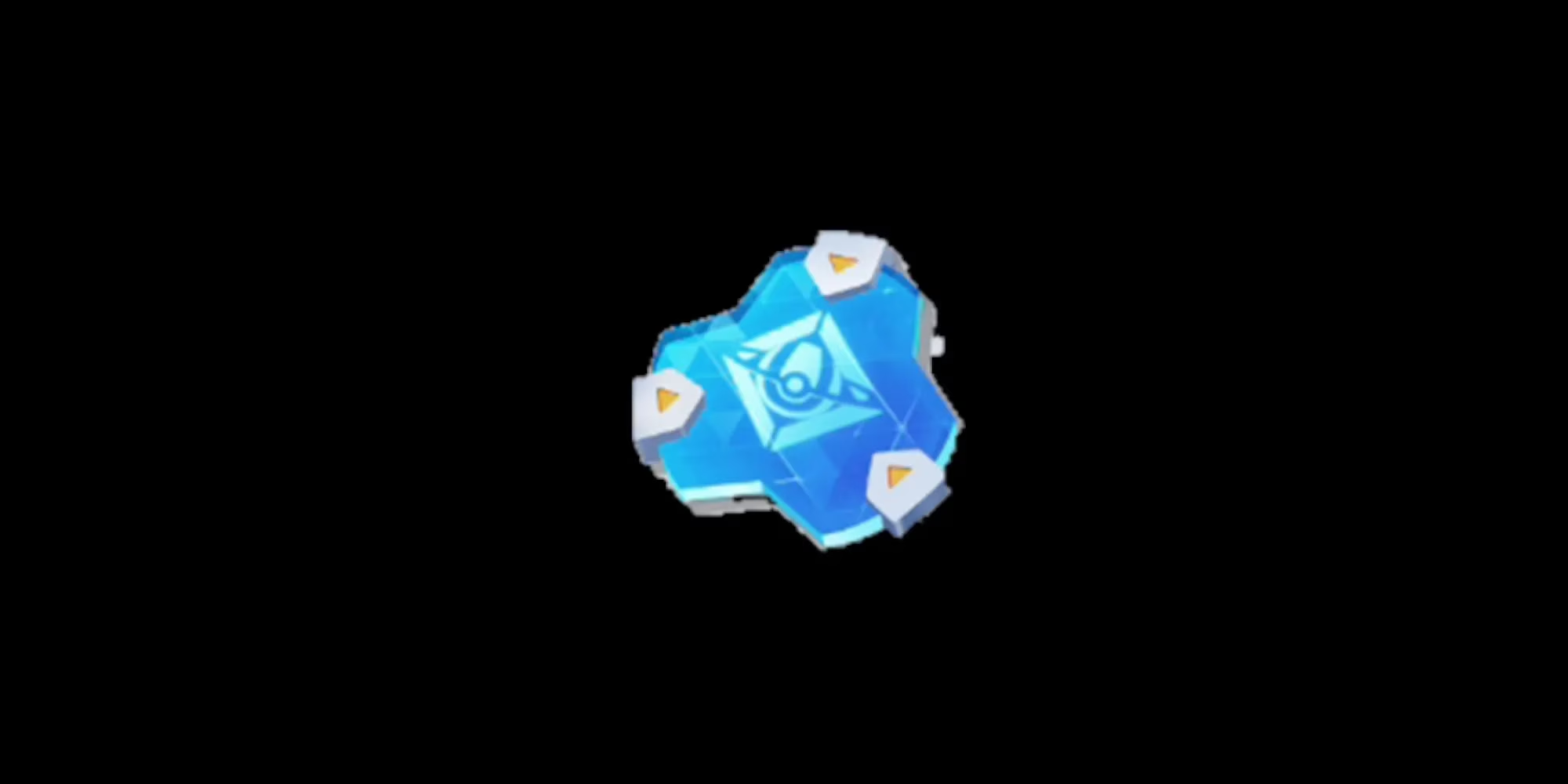
Kai often compared his item loadouts to a triad of shields: the reactive carapace, the proactive bulwark, and the life-giving lens. The first layer, and one he frequently leaned on, was the Assault Vest. For a Pokemon like Wigglytuff—whose HP pool was as vast as a twilight ocean—this item crafted a temporary spell-shield after eight seconds out of combat. It was a gossamer barrier against Sp. Atk damage, a silent guardian that whispered, “Not yet,” to enemy Delphox and Glaceon. When paired with other healing items, the Vest turned a Supporter into an immovable stone in a river of special attacks.
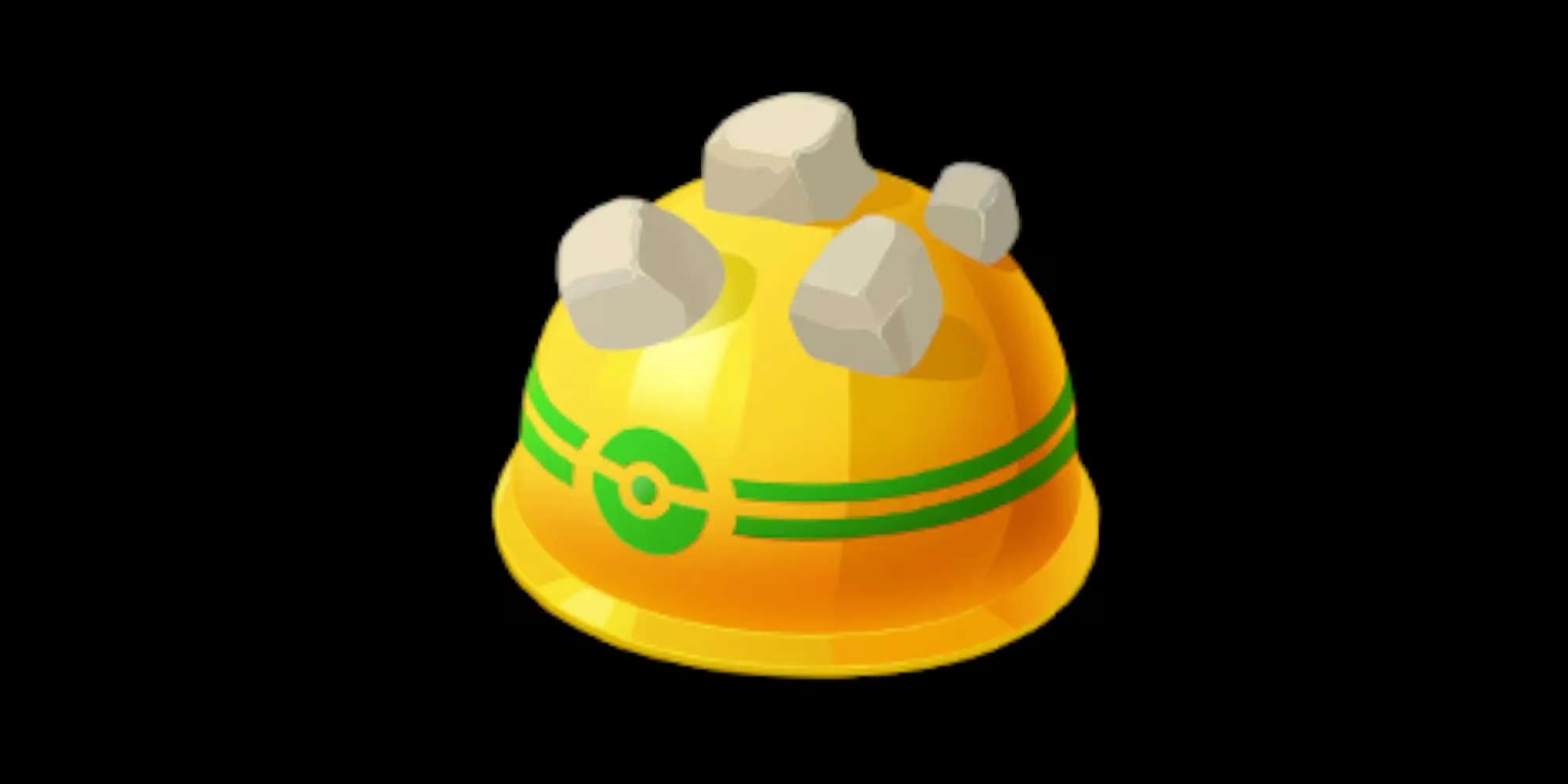
Then there was the Rocky Helmet, a spiteful piece of gear that mirrored Kai’s frustration toward rampaging All-Rounders. He thought of it as a porcupine’s quill coat—when a Charizard or Tyranitar bit down, it bit right back, reflecting a fraction of their colossal health. For high-HP supports like Blissey, it was a passive countermeasure. But Kai found its true magic on an aggressive Mr. Mime, who would wade into brawls, take the punishment, and let the crimson reflection chip away at overconfident foes. The battlefield became a war of attrition, and the Helmet was an unforgiving tax collector.
However, bulk alone was not enough. The Shell Bell restored health with every successful move, scaling with Sp. Atk. Kai imagined it as a hawk’s talon that draws vigor from each strike. Typically, this item was reserved for Attackers, but Hoopa and Eldegoss broke that mold. With Choice Specs or Sp. Atk Specs amplifying their damage, the Shell Bell transformed these guardians into self-sustaining artillery pieces, capable of retreating into the shadows only to reemerge fully healed after a well-placed Confusion or Hyperspace Hole.
Pushing deeper into the loadout, the Score Shield was Kai’s bet on momentum. The 425 HP boost was welcome, but the real prize was the scoring shield that rendered interruptions null. When Mr. Mime layered its own barriers on top, the resulting fortress could steal goals in the midst of an enemy ambush. Kai often merged it with an Aeos Cookie, turning each successful dunk into an incremental fortress—a strategy that was a slow, methodical strangulation of the opponent’s morale.
Yet no item defined the Support class like the Buddy Barrier. The moment a Unite Move was unleashed, a massive 40% health shield enveloped the user and nearby allies. It was a sunrise in the darkness of a teamfight, a shared heartbeat that let Blissey or Eldegoss plunge fearlessly into the fray. Kai used it like a lynchpin: when his team was scattered and low, a single Unite Move would drape them in a bulwark of second chances. He saw it as the leader’s cloak, spread wide to protect the entire squad.
But shields without teeth were just temporary. That’s where Sp. Atk Specs and Choice Specs came in. The former permanently raised Sp. Atk with each goal, while the latter dealt bonus damage on hits. When Kai’s Hoopa adopted this aggressive duo, it became a ghost in the enemy jungle—scoring, retreating, and returning with ever-heightening threat. He called it the avalanche effect: small gains compounding until the Supporter was an unstoppable force, able to duel opponents who underestimated the
“healer.”
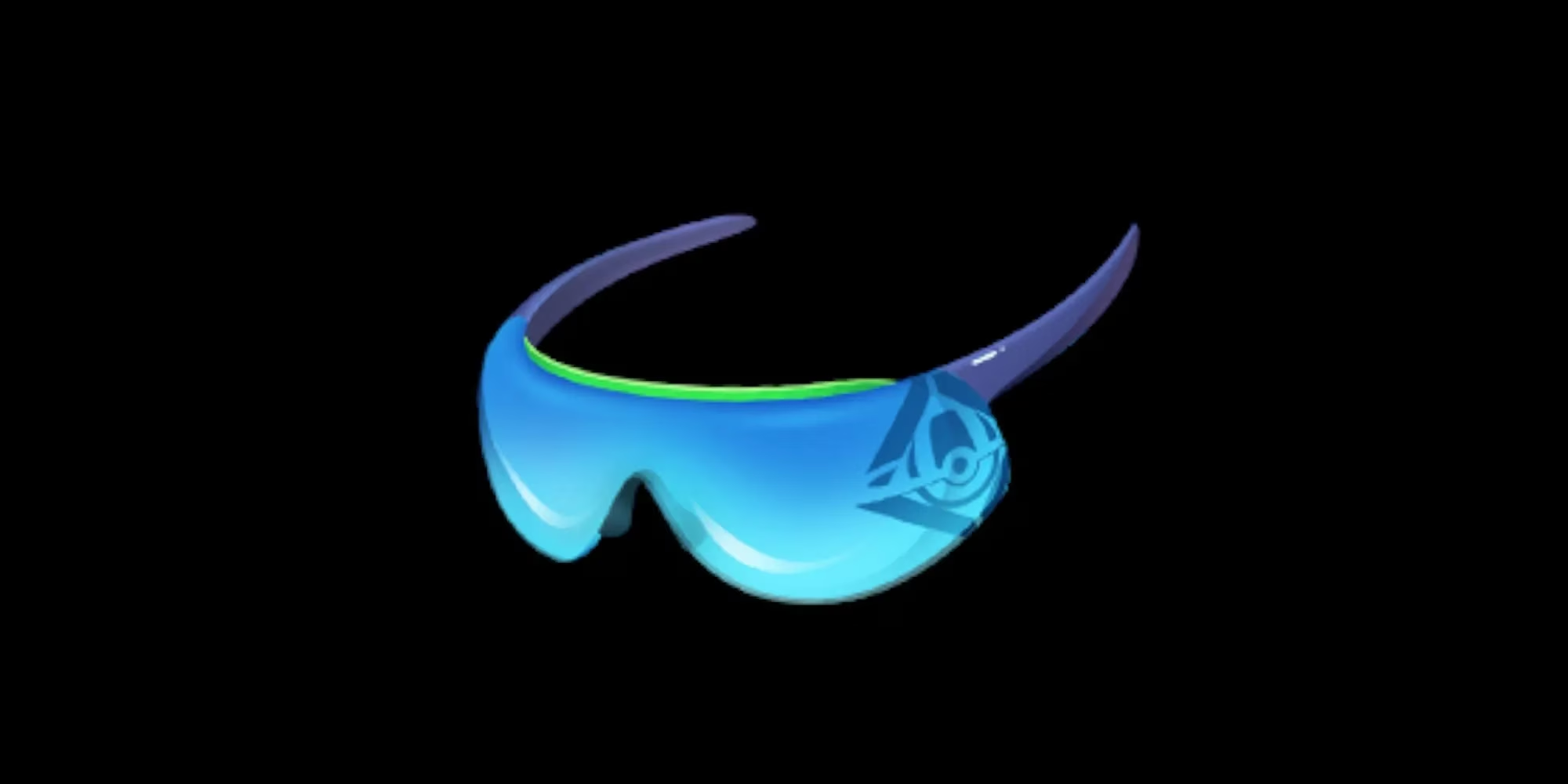
When the battle turned sour and health bars dipped into crimson, the Focus Band would ignite like a phoenix’s final cry. It boosted both defenses and triggered a rapid health regeneration for three seconds when HP fell low. Paired with the Buddy Barrier, a nearly fainted Eldegoss could activate Cotton Guard, pop its Unite Move, and return to full vitality, turning certain death into a triumphant reversal. It was a life raft in the crashing surf, a last gasp that often outlasted the enemy’s burst.
Finally, Kai turned to the Muscle Band not for raw damage, but for the execute. The three percent current-health damage on attacks was the silk thread that caught fleeing prey. Hoopa, with its boosted attack speed, became a reaper of the wounded, finishing what its allies started. This band was the quiet whisper that transformed a Supporter from a simple aide into a true executioner—a role no glass cannon expected.
As the 2026 season deepened and new Pokemon entered the arena—Goodra, Comfey, and beyond—these core principles remained. A Support Pokemon’s build was a symphony of interdependency; each held item was an instrument that, when tuned correctly, could harmonize into an impenetrable defense. Trainers like Kai knew that the difference between a good Supporter and a legendary one was not in the moves, but in the silent preparation before the match even began. The battle was won in the inventory screen.