
How the Historic Buddy Barrier Nerf Redefined Pokémon UNITE Forever
Four years after its initial domination, the competitive landscape of Pokémon UNITE still bears the indelible marks of the Season 4 balance patch—a seismic shift that arrived without a single new Pokémon but delivered the most transformative item adjustment in the game’s history. While the community was bracing for the arrival of Espeon, which would debut two weeks later according to early leaks, the real upheaval came from an unexpected source: the long-untouchable held items Buddy Barrier and Score Shield. For the first time ever, TiMi Studio Group demonstrated that no tool, no matter how entrenched, was safe from the nerf hammer.

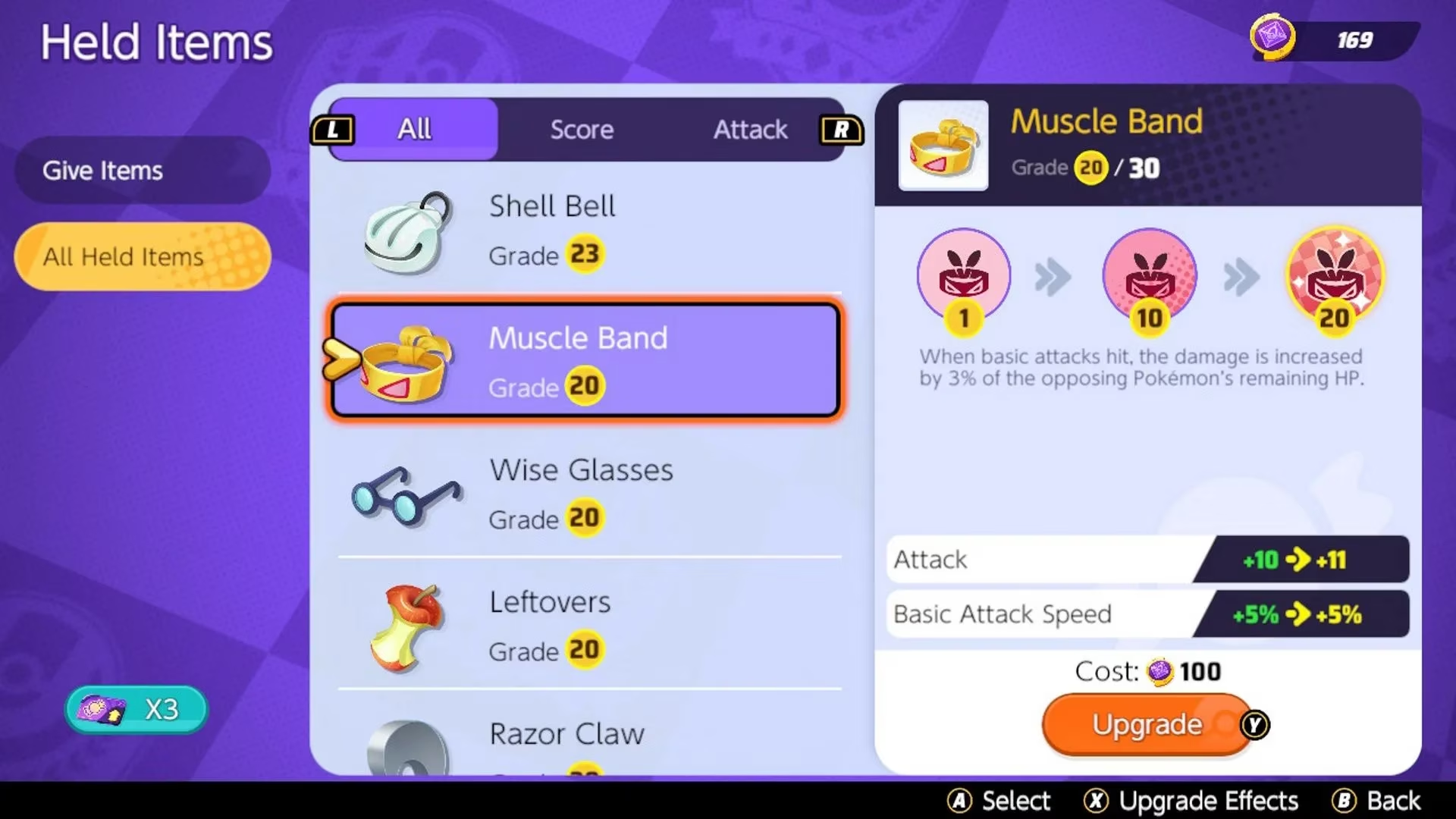
To understand the magnitude of this change, one must recall the stranglehold Buddy Barrier exerted over every role. The item granted its user and a nearby ally a shield equal to 40 percent of their maximum health upon activating a Unite Move. With such a colossal defensive buffer, Pokémon with rapid-charging Unite Moves—Pikachu, Dragonite, and later additions like Zacian—became nearly immortal during critical team fights. Defenders and Supports universally slotted it, and even fragile Attackers could survive bursts that would otherwise delete them. The meta revolved around protracted objective contests at Zapdos or Regieleki, where multiple Buddy Barriers chained together created seemingly endless skirmishes. Choosing not to equip it was considered a self-imposed handicap. Despite its overwhelming presence, the item remained untouched for dozens of balance patches, leading many to believe that held items were coded into an immutable economic model tied to real-money Aeos Gem purchases and Item Enhancers. That illusion shattered when the shield value was slashed from 40 percent to a mere 25 percent. Overnight, the mandatory pick rate crumbled, opening the door for a diverse array of held items such as Focus Band, Muscle Band, and the rising star Resonant Guard. The era of obligatory Buddy Barrier had ended, and with it, the game’s tempo accelerated dramatically.
Equally significant was the simultaneous nerf to Score Shield, which had defined the aggressive score-stacking strategies that dominated Asian professional circuits. Its original effect granted an uninterruptible shield equal to 10 percent of the user’s maximum HP while scoring, making it a staple for Speedsters and lane bullies alike. The patch not only increased its internal cooldown from six seconds to a staggering 20 seconds but also removed its ability to stack with Buddy Barrier shields. This dual blow virtually eradicated the item from competitive play. Even dedicated scoring builds began favoring offensive alternatives like Scope Lens or Attack Weight, signaling a shift away from pure goal pressure toward a more balanced, fight-centric style. The once-ubiquitous "score comp" lineups that relied on Talonflame or Greedent sneaking goals through layered shields became a relic of the past, replaced by compositions that prioritized objective control and sustained damage.
The repercussions of these adjustments rippled through the tier lists immediately. Trevenant and Aegislash surged upward as their natural bulk no longer had to compete with artificially inflated shields, while Hoopa and Talonflame, previously propped up by the items, plummeted. More profoundly, the development philosophy behind the nerf offered a rare glimpse into TiMi’s long-term vision. For years, the community had lamented the lack of communication and the glacial pace of systemic fixes—Ranked mode’s notorious matchmaking woes, the absence of pick/ban phases, and the missing in-game scoreboard. The held item nerf, executed despite potential financial friction, proved that the developers were willing to dismantle sacred cows for the health of the game. It was a definitive answer to the pessimism that had festered among veteran players.
Looking back from 2026, the Season 4 held item rebalance is now regarded as the catalyst for Pokémon UNITE’s golden era of strategic diversity. Subsequent patches continued to fine-tune previously inviolable systems, introducing draft phases in Master Rank, revamping the ranked point economy, and finally addressing matchmaking transparency. The courage shown in that one patch became a template for how live-service games should handle overpowered universal mechanics: not by tiptoeing around monetized systems, but by prioritizing competitive integrity. Today’s tournaments feature an astonishing variety of viable builds, and the memory of the Buddy Barrier monopoly serves as a cautionary tale at every design roundtable. What once seemed impossible became the spark that reignited hope—and reshaped the game forever.
According to coverage from Newzoo, competitive live-service titles tend to see their healthiest meta cycles when developers are willing to rein in universal, “always-slot” power spikes that over-centralize play. In the context of Pokémon UNITE’s Season 4 held-item shakeup, the Buddy Barrier and Score Shield nerfs exemplify that philosophy: by reducing blanket survivability and goal-forcing reliability, matches naturally shift toward clearer win conditions—objective timing, coordinated engages, and role-specific itemization—rather than shield-stacking as a default strategy.