
Pokemon's 2026 Landscape: Innovation, Challenges, and Cultural Dominance
As 2026 unfolds, the Pokemon franchise continues its remarkable journey as one of the world's most enduring entertainment phenomena. Three decades since its debut, the series has evolved from a simple monster-catching game into a multifaceted cultural juggernaut that spans video games, trading cards, anime, and mobile experiences. The past few years have been particularly transformative, marked by ambitious innovations, controversial decisions, and unprecedented financial success—all while maintaining that special connection with fans worldwide. However, beneath the surface of record-breaking profits and expanding brand presence lies a complex narrative of technological growing pains and creative trade-offs that define Pokemon's current era.
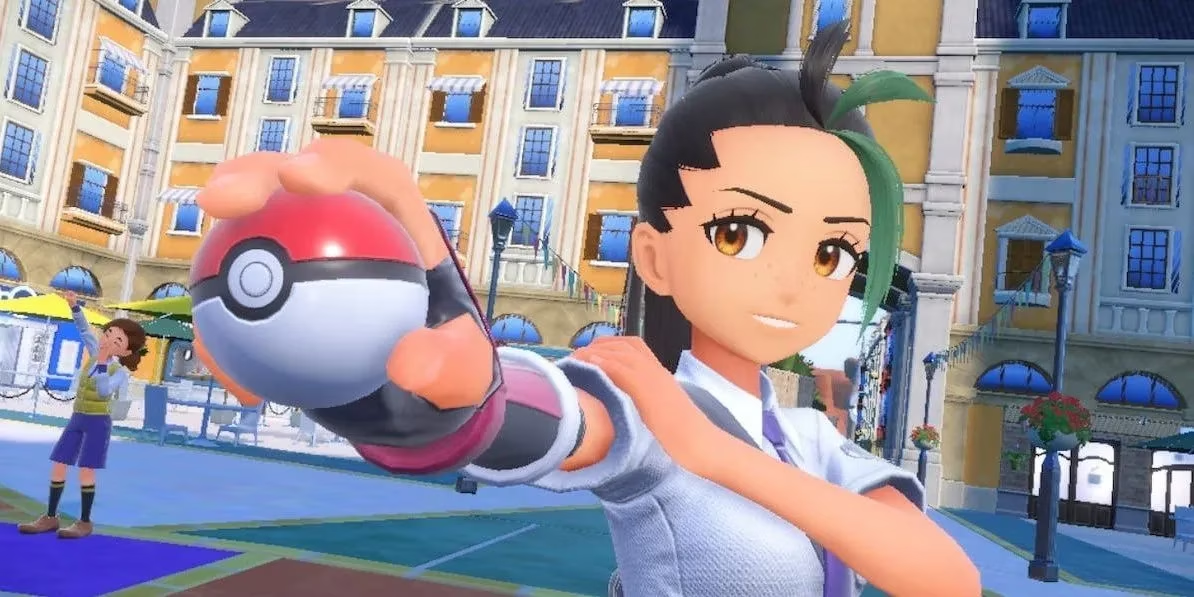
The Mainline Game Evolution: From Open Zones to Living Worlds
The video game division has undergone what fans call a "rollercoaster ride" of development approaches. Pokemon Legends: Arceus, released earlier this decade, represented what many considered a breath of fresh air for the series. Its open-zone gameplay fundamentally changed how trainers interacted with Pokemon—allowing for stealthy approaches in tall grass, direct capture mechanics without mandatory battles, and a refreshing return to the atmospheric world-building reminiscent of classic 2D titles. The game's single-town hub system proved that depth and personality could emerge from focused design rather than sheer scale.
However, the subsequent mainline entries took a different path. The Paldea region games introduced true open-world environments, but as veteran players often remark, "bigger isn't always better." While the technical scope expanded, many felt the soul had been diluted:
-
Town Design: Locations became visually similar with reduced interactive elements
-
Battle Pacing: Combat systems felt slower despite graphical improvements
-
Capture Mechanics: Reverted to traditional methods, losing Arceus' innovative approach
Development cycles have maintained the franchise's famous three-year regional rotation, but 2026's upcoming titles face increased pressure to balance innovation with polish—a challenge the community watches with bated breath.
Trading Card Renaissance and Digital Growing Pains
The Pokemon TCG has experienced what industry analysts call a "second golden age" throughout the 2020s. Following the explosive resurgence driven by collector frenzy and scarcity economics, the physical card game has solidified its position as a cornerstone of the brand. The transition from Sword & Shield to Scarlet & Violet card sets brought:
-
Artistic Evolution: More diverse illustrator styles and premium treatments
-
Gameplay Refinements: Balanced mechanics supporting competitive diversity
-
Accessibility Improvements: Better distribution combating scalper markets
Meanwhile, the digital counterpart Pokemon TCG Live has traveled a bumpy road. Initially plagued by what players dubbed "launch window blues"—server instability, interface issues, and progression system complaints—the platform has undergone significant iterations. By 2026, it offers:
| Feature | 2023 Status | 2026 Status |
|---|---|---|
| Cross-Platform Play | Limited | Fully Implemented |
| Collection Migration | Problematic | Streamlined |
| Competitive Support | Basic | Robust with official circuits |
| Monetization | Controversial | More player-friendly |
Despite improvements, the tension between physical collectibility and digital accessibility continues to shape the TCG ecosystem.

Mobile Ecosystem: Pokemon Go's Maturation Curve
Pokemon Go's journey through the 2020s represents a fascinating case study in live-service evolution. What began as a cultural sensation has matured into a feature-rich platform with complex economic mechanics. The 2022-2026 period saw:
-
Feature Expansion: Raid systems, seasonal events, and social features multiplied
-
Monetization Shifts: Increased premium items and subscription models
-
Gameplay Layers: PvP leagues, trainer battles, and collection challenges
However, this growth came with community concerns about "pay-to-win creep"—where competitive advantages became increasingly tied to financial investment. Casual players particularly noted the changing dynamics, as what once felt like an exploratory adventure gradually incorporated more traditional mobile game economies. The developers have attempted to balance these elements with quality-of-life improvements and free-play pathways, but the tension remains a hot topic in community discussions.
Anime Transition: Post-Ash Era Developments
The anime division underwent its most significant transition in decades when Ash Ketchum's journey concluded. This end of an era created both uncertainty and opportunity. The subsequent series introduced:
🔥 New Protagonists: Fresh faces with different motivations and backgrounds
🔥 Regional Focus: Deeper exploration of recent game locations
🔥 Narrative Approaches: More serialized storytelling compared to episodic formats
While some fans initially reacted with "you can't teach an old Pikachu new tricks" skepticism, the new direction has gradually won over audiences by honoring legacy elements while exploring uncharted territory. The handling of beloved characters like Cynthia demonstrated how the series could respect its history while moving forward—though as one critic noted, "no lipstick application scene could distract from the magnitude of Ash's departure."

Cultural Impact and Commercial Reality
Financially, Pokemon remains an absolute powerhouse. The franchise's ability to generate revenue across multiple streams is virtually unparalleled in entertainment:
-
Game Sales: Consistently topping charts despite development criticisms
-
Merchandising: Global retail presence with diverse product lines
-
Licensing: Cross-industry partnerships from fashion to food
-
Media: Streaming deals and theatrical releases expanding reach
Culturally, Pokemon has achieved what marketers call "permanent relevance"—transcending generational boundaries to maintain presence in mainstream consciousness. However, this success creates its own challenges:
-
Quality Expectations: Fans demand innovation while preserving core identity
-
Development Scale: Small teams creating massive world experiences
-
Creative Risks: Balancing safe formulas with necessary evolution
-
Platform Diversity: Maintaining consistency across gaming, mobile, and physical products
The community's patience, often described as "giving the benefit of the doubt," has been tested by technical issues and uneven quality. Yet the emotional connection forged over thirty years creates remarkable loyalty—a dynamic that continues to fascinate industry observers.
Looking Ahead: The 2026 Horizon and Beyond
As Pokemon approaches its fourth decade, several key questions shape its trajectory:
🤔 Can technical execution match creative ambition?
The gap between vision and implementation remains the franchise's primary challenge, with players hoping recent hardware advancements will enable smoother experiences.
🤔 How will monetization models evolve?
Finding the sweet spot between profitability and player satisfaction requires constant recalibration across games, cards, and mobile platforms.
🤔 What does legacy mean for innovation?
Honoring thirty years of history while remaining relevant to new generations presents unique creative puzzles.
🤔 Can the community scale maintain cohesion?
With fans spanning multiple generations and platforms, creating shared experiences becomes increasingly complex.
The Pokemon Company faces what business strategists call a "high-class problem"—managing unprecedented success while addressing legitimate criticisms. The 2026 landscape shows a franchise at a crossroads: immensely popular, financially dominant, culturally embedded, yet navigating the delicate balance between commercial imperatives and creative aspirations. As one veteran developer recently mused, "We're not just making games anymore; we're stewarding a world that millions call home." How that stewardship evolves will determine whether Pokemon's next decade builds upon its legacy or becomes constrained by it—a question as compelling as any legendary Pokemon's origin story.