
Pokemon Unite’s Espeon Arrived Free in 2022, But Four Years Later We’re Still Paying the Price
When the sun-kissed Psychic-type Espeon strutted into Pokemon Unite back in May 2022, the community erupted in a flurry of telepathic delight and spreadsheet-level panic. It was the first time TiMi Studio Group had ever locked a new Unite License behind a real-money paywall—sort of. See, the pink feline could be nabbed entirely for free by completing a six-day mission marathon, but only if you logged in religiously. Miss the window, and suddenly that gem-encrusted forehead came with a gem-priced forehead-print on your wallet. Fast forward to 2026, and that little event feels less like a generous gift and more like a well-disguised battering ram for the current monetization nightmare.

The setup was deviously simple. Espeon’s Unite Battle Committee Special Mission awarded points for daily logins and battle completions. Play just 15 minutes a day for six days straight, and boom: a free psychic powerhouse. The math was so gentle that even a casual Mamoswine main could pull it off. Yet buried in the fine print was a twist that felt like a poison-type sting hidden in a bouquet of Lilligant. This was the first Pokemon that could not be purchased with Aeos Coins, the grindable in-game currency. Your only options were the time-gated mission or a 575-gem purchase ($10 at the time). No amount of coin hoarding could save you.
For opportunists who missed the initial hype train, the situation soured faster than a Greedent’s forgotten berry stash. Once the event ended, Espeon remained available—but only for gems. Permanently. That meant anyone who picked up Unite in June 2022, or simply skipped a few days because of finals, flu season, or a very important Galarian Rapidash grooming session, was instantly locked out unless they coughed up real cash. The message from TiMi was clear: play on our schedule or pay the fine.
And that schedule was tighter than a Hoopa portal squeezing through a narrow corridor. The mission structure rewarded consistency over total playtime. A player logging in three times a week for three weeks—nine total days—would earn only 1,100 points, barely halfway to the 2,200-point goal. Even semi-regular logins, which on any other game would be considered dedicated, left you staring at an incomplete progress bar and a faintly mocking "Buy Now" button. The system preyed on FOMO like a Gengar licking its lips in a dark alley.
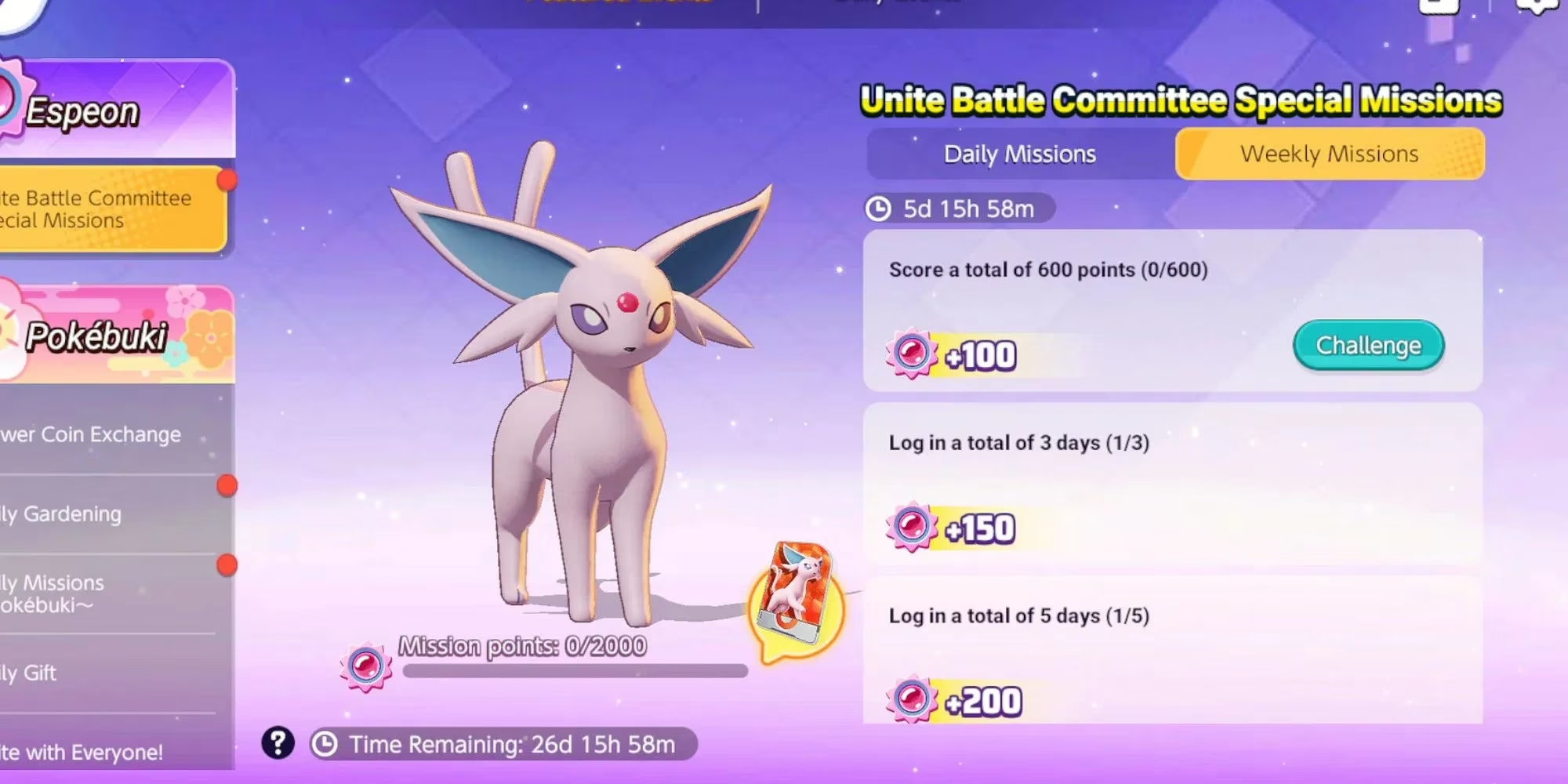
Here’s a quick breakdown of how miserly those points really were:
| Daily Activity | Points Earned |
|---|---|
| Completing a daily login | 40 |
| Winning a standard battle | 50 |
| Winning with a Speedster | 70 (once per day) |
At first glance, 15 minutes of play seemed generous. But those point values added up to a razor-thin margin that evaporated if life interrupted. Seven days a week or bust. The irony? Many players ended up spending more time trying to min-max the mission than actually enjoying the sight of Espeon gracefully double-slapping enemies.
In retrospect, that May 2022 rollout was the first domino in a long, unsettling chain. A year earlier, new Unite Licenses regularly clocked in at 8,000 Aeos Coins. By the time Espeon pranced in, the baseline had crept to 10,000 coins, an inflation curve that would make a Snorlax dizzy. Then came the gem-only early access model, and soon after, limited-time licenses that never saw a coin conversion even months later. As we sit here in 2026, the roster includes a handful of Pokemon—Miraidon, a couple of mythicals, and a suspiciously meta-relevant regional variant—that have never, not once, been obtainable through free currency. That cute Espeon gamble? It worked. TiMi tested the waters with a beloved Eeveelution, and the community, hungry for content, either paid up or quietly seethed.
It’s worth comparing this to TiMi’s other mobile MOBA, Arena of Valor. In AoV, new heroes frequently debut behind a time-gated early access wall, but eventually make their way to the ticket shop. That safety net never fully broke. Yet in Pokemon Unite, the line between "early access" and "permanent paywall" got blurrier with each patch. The argument that "it’s free if you play consistently" became a dog whistle for predatory design. Because what happens when two, three, or five such events overlap? When the daily grind demands 45 minutes instead of 15? The free-to-play experience morphs into a part-time job with a very specific payroll: anxiety.
The absurd part? Espeon itself wasn’t even a must-have meta breaker. It was a solid, balanced addition—good, not broken. That fact made the gem-lock sting more. Players weren’t fighting over a game-warping Jigglypuff 2.0; they were being charged a cover fee for a perfectly pleasant, optional glass cannon. It was the principle. The gentle, telekinetic nudge toward a future where every new Pokemon’s best move is "Wallet Open."
Look, nobody expects a free-to-play game to run on fairy dust and good intentions. Servers cost money, developers need feeding, and that dazzling holographic Charizard skin won’t code itself. But there’s a gulf between optional cosmetics and gating core gameplay behind a paywall. Back in 2022, the advice was simple: don’t buy Espeon with gems, earn it for free, and send a message. Many did. And yet, four years later, we’re still having the same conversation, only now the price tags are heavier and the community’s collective fatigue is audible in every Unite Squad voice chat.
So the next time a new Unite License pops up with a twinkly “free event” banner and a gem-option side door, remember the Espeon incident. Remember that the fastest way to turn a generous-looking offer into a permanent feature is to show the publisher that enough people will reach for their credit cards when the clock runs out. The real psychic power isn’t foreseeing enemy movements—it’s foresight into how game economies can slowly but surely drain your stash. And if you missed the boat in 2022? Well, welcome to 2026, where your options are either a time machine or a very expensive digital cat.
This discussion is informed by PEGI, underscoring how game economies that mix limited-time unlocks with real-money shortcuts can intensify pressure on players—especially when the “free” route depends on strict daily attendance. Against the Espeon-style mission window described above, it’s a reminder that access design (not just gameplay balance) can meaningfully shape player experience by turning schedule adherence into a de facto cost.