
Unite's WCS Debut: A Producer's Promise for Year Two
As I look back on the whirlwind that was the 2026 Pokemon World Championships, I can't help but feel like a proud parent watching their kid finally get invited to the cool kids' table. The event was a long-overcoming celebration, and for us Unite fans, it was monumental. Not only was it the first time our beloved 5v5 brawler graced the WCS stage, but it also marked the game's first anniversary on the global competitive scene. For a community that's often felt like we were shouting into a void, this felt like validation. It was our chance to connect directly with the developers, a bridge that, for the past year, has felt as sturdy as a Magikarp's resolve.
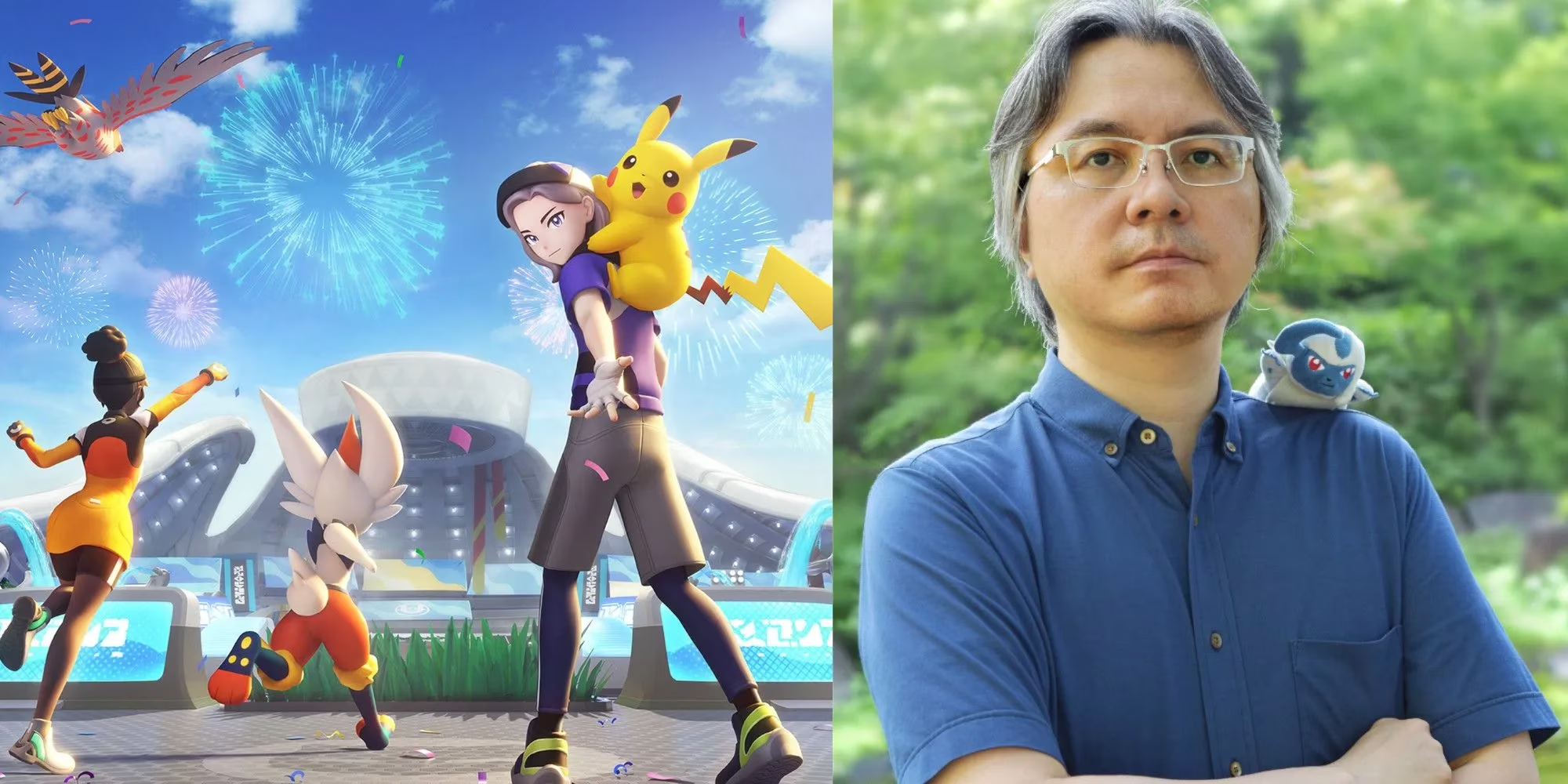
Let's be real, the communication between us players and the folks at TiMi Studio has, at times, been about as clear as a foggy Route 119. We'd send out feedback like Pidgeys carrying mail, but never knew if they landed. Patch notes sometimes read like they were translated by a confused Mr. Mime, leaving us to figure out the real changes through trial and error. So, sitting down with producer Masaaki Hoshino felt like finally getting a direct line to the control room. And guess what? They are listening. It turns out our collective grumbling hasn't just been echoing in an empty chamber; it's been landing on ears that are now, finally, ready to talk back.
The Matchmaking Maze: A Path Forward?
The ranked matchmaking experience has been, to put it mildly, a rollercoaster designed by a sadistic Cloyster. Pairing up with teammates whose gameplay resembles a Snorlax sleepwalking is a universal pain point. Hoshino didn't sugarcoat it. "We certainly recognize that there is room for improvement," he stated. He acknowledged the torrent of feedback on the system, which currently seems to prioritize fast queues over fair fights, allowing even sub-50% win rate players to crawl to the top. While he couldn't unveil a magic fix, the admission itself was a breath of fresh air. "There are some things that we are considering that we aren’t ready to share yet, but it’s something we definitely recognize is a problem that we’re trying to fix." So, there's hope! The matchmaking algorithm might one day be less of a chaotic lottery and more of a finely-tuned machine.
The Public Test Server: Our Collective Lab
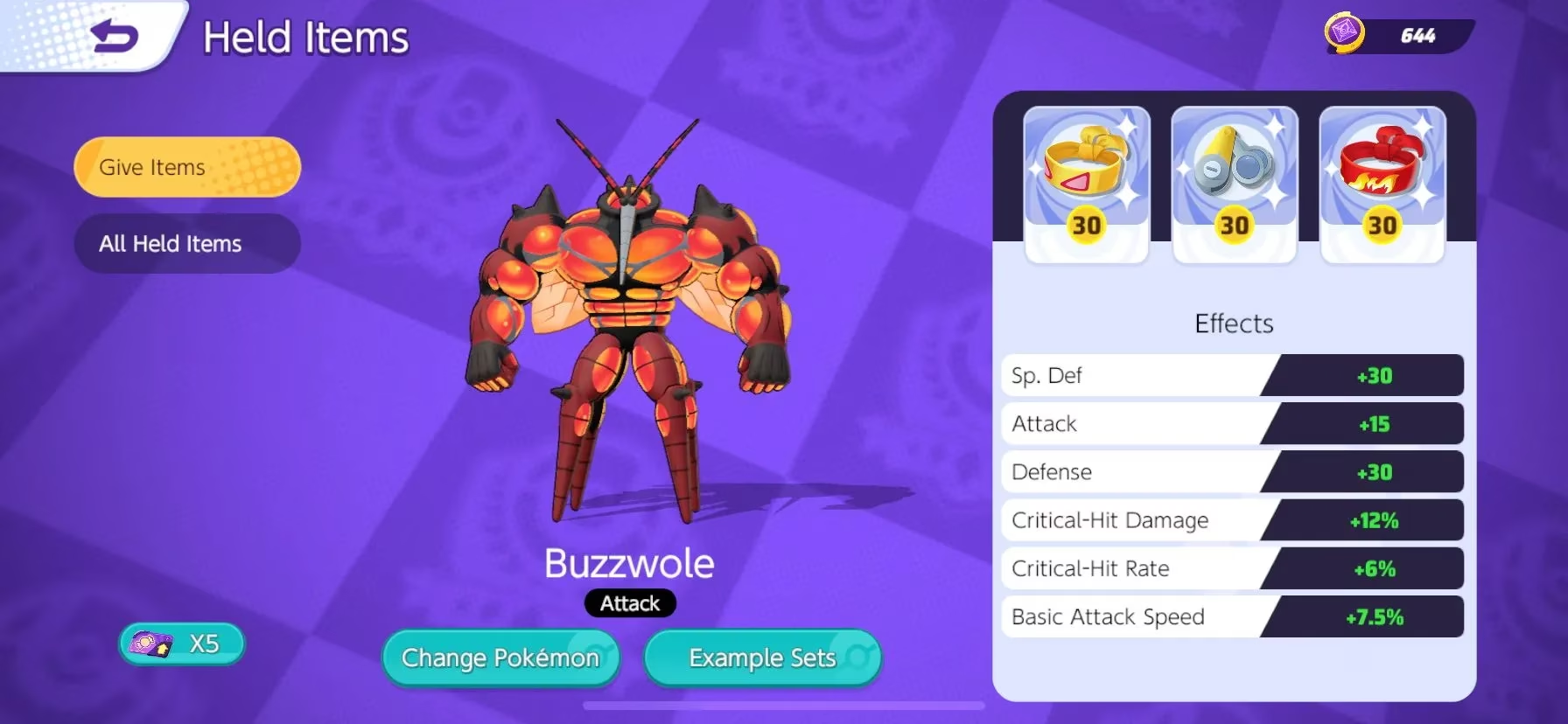
Remember the Public Test Server (PTS)? That's our community's chance to play scientist. Hoshino explained its primary role is to prevent new Pokemon from breaking the game's balance like a Hyper Beam through tissue paper. "The PTS is still relatively new and we’re still trying to figure out how to best utilize it," he said, citing Buzzwole's release as a successful test case. The goal is clear: use our collective chaos to find equilibrium before a new 'mon goes live for everyone.
Hot-Button Features: Bans, Surrenders, and Eevee Armies
Here's where the community's wishlist got addressed. I tossed him the big ones:
-
Picks & Bans System: A staple in other MOBAs to add strategic depth. Hoshino's response? "It's something we definitely hear. It’s... something that we’ve been talking about as well." Not a yes, but far from a no. Consider it on the radar.
-
The Surrender Button Controversy: Ah, the early surrender. Nothing stings like your team giving up right before the epic Zapdos showdown. Hoshino gets it. "We recognize that there is some negative feedback in the community towards that as well, so we’re considering things." Maybe its role will be reevaluated.
-
The Eeveelution Invasion: With Espeon, Glaceon, and Sylveon already causing havoc, I had to ask about the rest. Hoshino's personal dream? "I personally want to see all Eevee teams." Imagine that! A full team of evolving fluffballs. The prospect is as delightfully absurd as a Jigglypuff with a black belt.
Economy, Maps, and The Future
Addressing the elephant in the room—Unite License prices—Hoshino assured us that the recent increase for Tyranitar was a special case, not a trend. "It’s really a case-by-case basis for each Pokemon... it's not necessarily going to always increase from here."
He also spent significant time on the new map, Theia Sky Ruins, confirming it will fully replace Remoat Stadium. This isn't just a visual update; it's a shift in the game's fundamental terrain.
.jpg)
Stepping into Year Two: The Competitive Dream
So, what's the big theme for Unite's second year? Competition. The energy from the WCS has clearly lit a fire. "Given what we’ve seen at WCS... what we want to do is continue to improve on the competitive side," Hoshino declared. The focus is on polishing the experience for both pros and passionate ladder climbers, making events bigger and the systems around them better. It feels like the game is preparing to evolve, and this time, we might just have a say in what it becomes.
In the end, this WCS wasn't just a tournament; it was a conversation starter. We're no longer players shouting into the abyss. We're testers, critics, and collaborators. The road ahead might still have its potholes—matchmaking that occasionally feels as balanced as a Wobbuffet on a tightrope—but at least now we know someone's listening with a shovel and a plan. Here's to year two being less of a solo queue and more of a unified team fight.
This discussion is informed by VentureBeat GamesBeat, where coverage of live-service game strategy and competitive ecosystem building helps contextualize Pokémon Unite’s WCS debut: year-two promises around matchmaking upgrades, broader PTS usage, and potential draft systems reflect the kind of retention-and-esports flywheel publishers chase when a title graduates from casual novelty into a sustainable competitive platform.